


Related Posts
 Chili peppers: a nutritious food from farm to table, with both edible and medicinal value
- Chili peppers and bell peppers: Understanding their morphological differences and cultivation characteristics in one article
- What do we know about China's pepper production and trade
- From "Diplomat" to "Pepper Officer": The Legend of Chinese Peppers by Italian Luca Zhang
- Zhang Luka: Why is chili pepper so popular on the world's dining tables

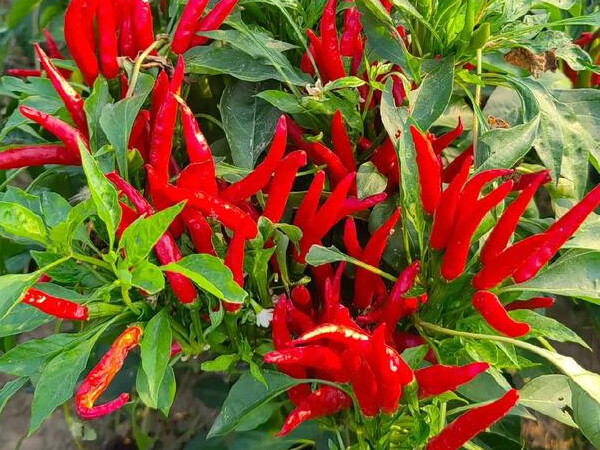
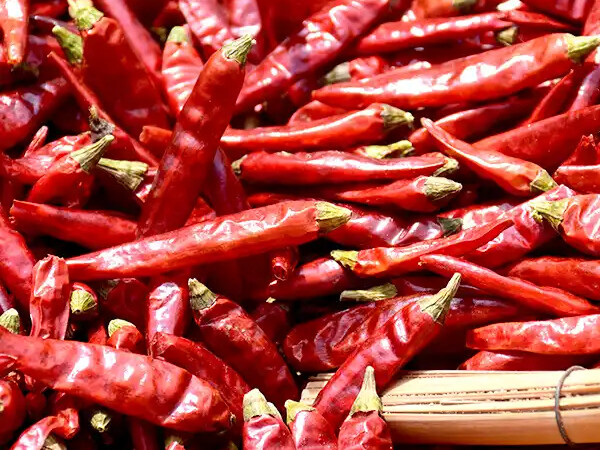

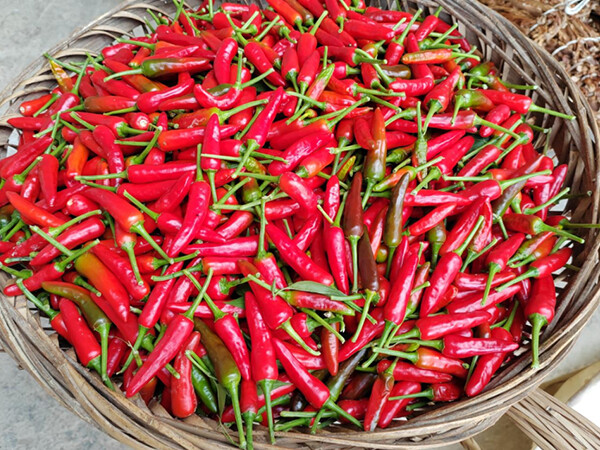
Chili peppers belong to the nightshade family of vegetables and have a long history of cultivation. They are rich in vitamins and trace elements such as calcium and iron, and possess high edible and medicinal value. Due to their unique flavor and ease of preservation, chili peppers are deeply loved by people around the world and are an indispensable part of human dietary culture.
Globally, over two-thirds of countries or regions grow or consume chili peppers. There are more than a thousand varieties of chili peppers and their products, making them an important condiment in daily life. According to customs statistics, chili peppers involved in trade are mainly divided into dried chili peppers and fresh chili peppers. Dried chili peppers include dried sweet peppers, dried chili powder, unground dried chili peppers, and ground chili peppers; fresh chili peppers include fresh or refrigerated chili peppers (including sweet peppers).
Chili peppers were first discovered in the Americas. Since their introduction to China during the Ming Dynasty, they have continuously transformed the Chinese people's dietary culture.
Currently, China is the world's largest producer and trader of chili peppers. Chili peppers are cultivated in 28 provinces (autonomous regions and municipalities) across the country, with major planting provinces including Guizhou, Henan, Yunnan, Inner Mongolia, Chongqing, and other provinces (autonomous regions and municipalities). There are seven major production areas, namely the main production area of central China, the main production area of protected fields in the north, the main production area of spicy food lovers in the south, the main production area of chili peppers in the northwest, the main production area of outdoor summer and autumn chili peppers in the northeast, the main production area of chili peppers transported from the south to the north, and the main production area of alpine vegetables.
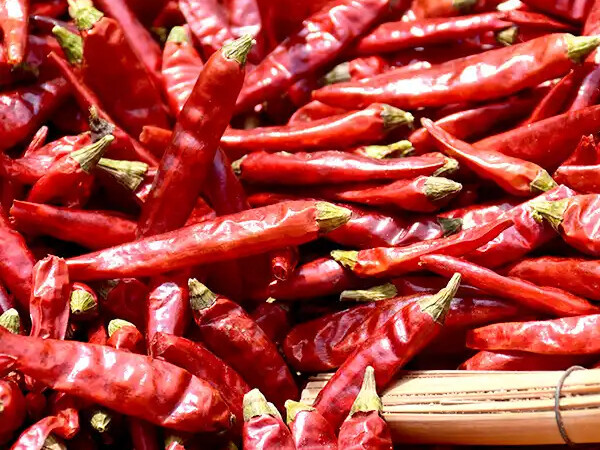
In 2022, China's pepper trade amounted to USD 2.11 billion, remaining largely unchanged from 2021. Specifically, the export value of peppers reached USD 1.71 billion, marking a year-on-year increase of 11.6%, while the import value stood at USD 400 million, a decrease of 30.7%. In terms of trade categories, the majority were dried peppers, with an export value of USD 1.56 billion, up 8.1% year-on-year, and an import value of USD 360 million, down 31.7%. Fresh peppers saw an export value of USD 140 million, marking a surge of 71.2% compared to the previous year, while their import value amounted to USD 40 million, a decline of 21.5%.
The top three export markets for Chinese chili peppers are the United States, Japan, and Spain, with export values of $350 million, $200 million, and $150 million, respectively, accounting for 41.1% of the total chili pepper export value. The top three import sources are India, Myanmar, and Thailand, with import values of $330 million, $30 million, and $20 million, respectively, accounting for 95.0% of the total chili pepper import value. Among them, the United States has been the largest export market for Chinese chili peppers for 11 consecutive years, and India has been the largest import source for 4 consecutive years.
The top three exporting provinces for chili peppers in China are Shandong, Hebei, and Henan, with export values of $1.01 billion, $0.08 billion, and $0.07 billion, respectively, accounting for 71.6% of the total export value. The top three importing provinces are Shandong, Yunnan, and Guangdong, with import values of $0.15 billion, $0.05 billion, and $0.05 billion, respectively, accounting for 61.8% of the total import value.
In recent years, China's chili pepper exports have experienced frequent fluctuations. There is still a gap in the mid-to-high-end chili pepper market, and the market share of low-end chili peppers is unstable. Since the peak of China's chili pepper trade surplus reaching $1.62 billion in 2017, it has declined for four consecutive years. In 2021, the surplus was only $946 million, a year-on-year decrease of 42%. However, in 2022, chili pepper trade rebounded, with a surplus of $1.30 billion, an increase of 37%.
Pepper is one of the important vegetable crops in China, with numerous processed products, a long industrial chain, and high added value. The development of the pepper industry is of great significance for promoting farmers' income increase.
From the perspective of the domestic market, chili pepper food culture has a solid foundation in China. With the improvement of chili pepper cultivation, a wide range of chili pepper varieties with different levels of spiciness and various uses have emerged, creating conditions for people in different regions to consume chili peppers. At the same time, the functions of chili peppers in medical treatment, health care, beauty, and other aspects are gradually being explored, and the development potential of functional products will be further unleashed.
From the perspective of the international market, with the development of deep-processing industries such as paprika oleoresin and capsaicin, the demand for chili peppers as raw materials will increase. In the future, China, as the largest chili pepper producer, is expected to usher in new export opportunities. However, we must also pay attention to the situation of other exporting countries, such as India's primary chili pepper products and the high-end chili pepper products from countries like the United States, which are highly competitive internationally. Therefore, accelerating the development of more products that meet the local dietary culture and habits of export destinations, and leveraging the advantages of production raw materials to accelerate integration into the international deep-processing industry chain of chili peppers, will help increase the trade development opportunities for China's chili pepper industry.
Leave a Message
Thank you for your interest in our products. "*" Indicates the Fields are Mandatory